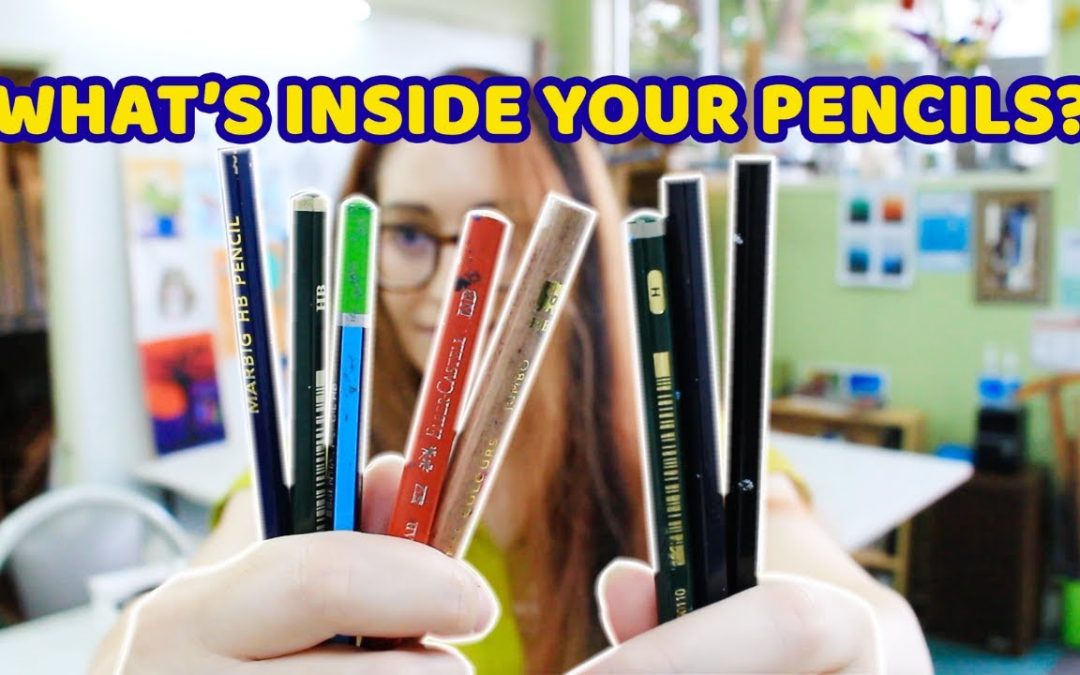
Have you ever wondered what’s really inside your “lead” pencils? Spoiler alert: they’re actually made of graphite and clay! The ratio of these two materials is what gives pencils their unique characteristics, making them either softer (B-grade) or harder (H-grade).
In this video, Jess breaks down the different types of graphite pencils — HB, B, 2B, 6B, and H grades — and she explains how they are made. She will discuss the pros and cons of each pencil type, to help you find the best one for your artwork!
This video was inspired by a conversation with one of our students. She had been working on a tonal drawing of a woman and happened to try out an H-type pencil for the first time. After explaining the differences between each pencil grade, she was excited to try out more, and we hope this video can help you, too!
What Do “B” and “H” Mean on Graphite Pencils?
B Pencils: The “B” stands for black, indicating a softer, darker pencil. These are great for shading, blending, and achieving a rich, dark tone. However, their softness means they can smudge easily and lose their point faster.
H Pencils: The “H” stands for hard, and these pencils produce lighter, more precise lines. However, they can leave indentations on your paper, making them less forgiving when you’re still learning.
HB Pencils: Right in the middle of the spectrum, HB pencils offer a balanced combination of hardness and softness. They are perfect for everyday drawing and sketching.

Why You Should Experiment with Different Pencils
It’s crucial to test out a variety of pencils to see what works best for your technique. If you’re new to drawing, we generally recommend starting with softer pencils (HB or 2B) to practice your pressure control. Hard pencils (H grades) may seem appealing, but they can easily damage your paper if you press too hard.