
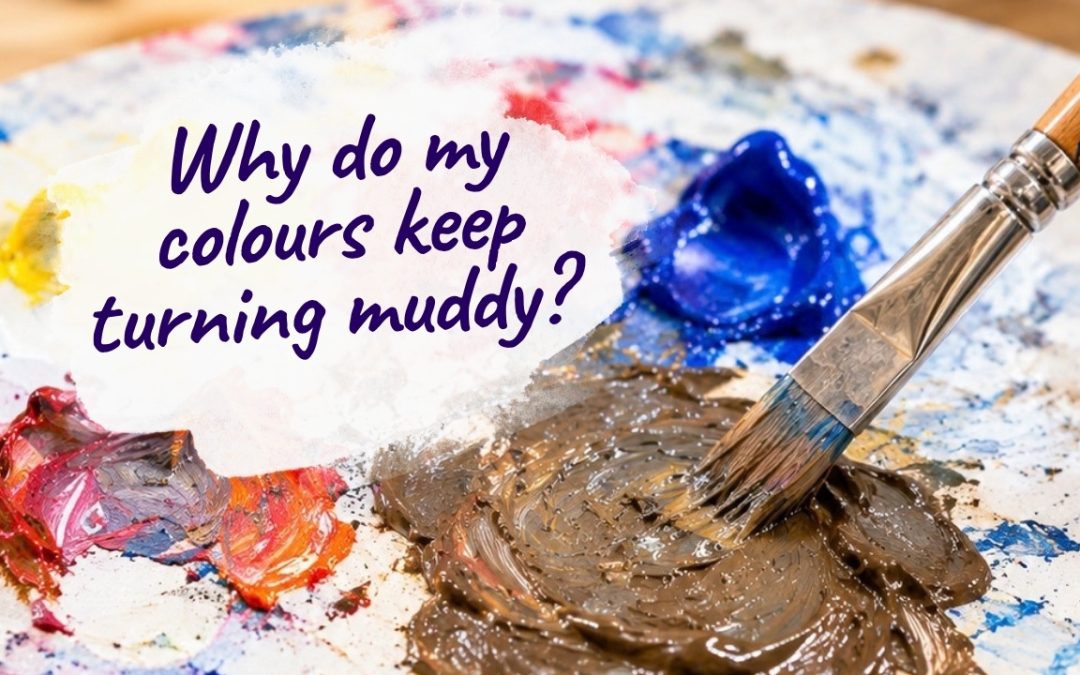
Have you ever mixed two beautiful paint colours together, only to end up with a dull, muddy mess?
It’s one of the most common problems when you’re learning to paint, and it can be frustrating when the colours on your canvas don’t look quite how you imagined.
The good news is that muddy colours are usually easier to avoid than you think! A few small changes to how you mix and apply your paint can make a big difference.
Here are three simple ways to keep your paint colours clean and fresh.

1. Stop Mixing Everything Together
One of the biggest causes of muddy colours is mixing too many different paints together.
Every time you add another colour to your mixture, you’re changing its balance. Adding too many colours, particularly ones that work against each other, can quickly turn a bright mixture into something dull and muddy.
How to avoid it:
- Start with just two colours and see what happens when you mix them.
- Add small amounts of another colour gradually, rather than adding too much at once.
- Avoid constantly adding more colours to try to fix a mixture that isn’t working.
- If your mixture becomes too muddy, sometimes it’s easier to start again with fresh paint.
It’s also helpful to understand how complementary colours work. These are colours that sit opposite each other on the colour wheel, such as red and green, blue and orange, or yellow and purple. When mixed together, complementary colours can neutralise each other, creating more muted colours, browns and greys.
2. Clean Your Brush!
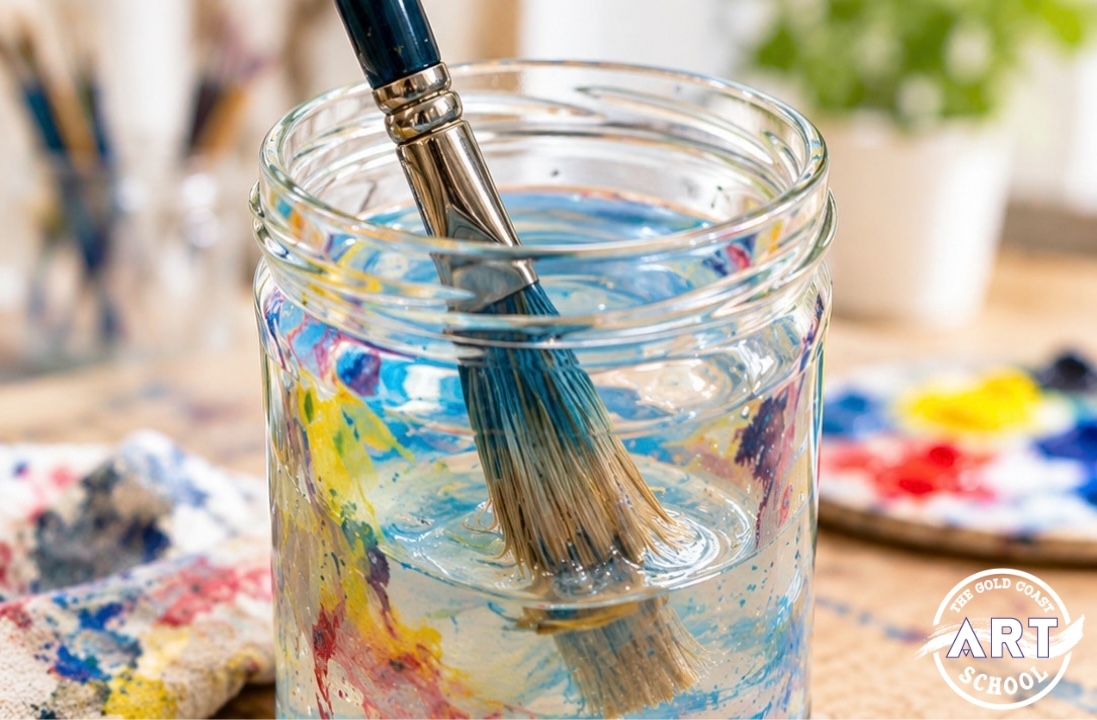
Sometimes the problem isn’t the colours you’re mixing. It’s what’s already on your brush!
A dirty paintbrush can carry leftover paint into your next colour mixture, changing the colour without you even realising it.
This is particularly noticeable when working with strong colours or complementary colours.
For example, if you’ve been painting with blue and then dip the same brush into yellow without cleaning it properly, you might end up with green instead of the bright yellow you wanted.
How to avoid it:
- Clean your brush thoroughly when changing between colours.
- Wipe excess paint from your brush before mixing a new colour.
- Keep your palette clean and give each mixture its own space.
- Consider using separate brushes for light and dark colours when working on a painting.
Taking a few seconds to clean your brush can save you a lot of frustration later!
3. Don’t Overwork Your Paint
Have you ever kept blending an area of your painting, trying to get it just right, only to find that the colours start looking dull?
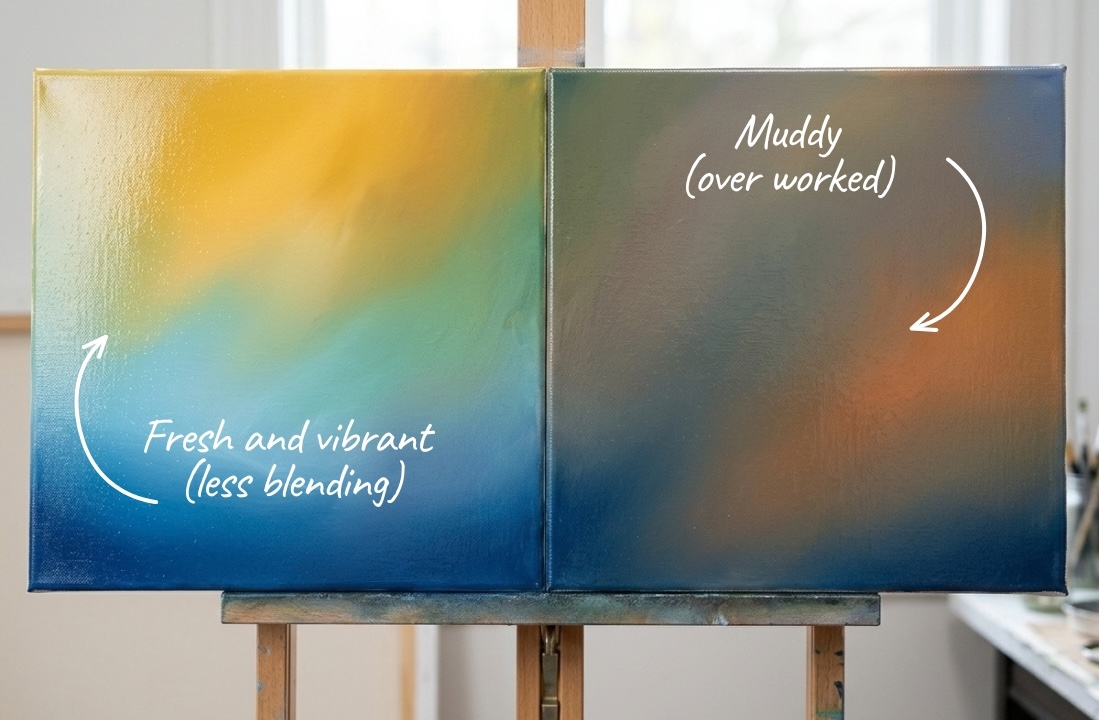
Overworking your paint is another common reason colours become muddy.
When you repeatedly brush over the same area, the different colours can blend together more than you intended. Instead of keeping their individual colour and vibrancy, they can become one flat, dull mixture.
This can happen with both oil and acrylic paints, particularly when you’re trying to blend colours directly on the canvas.
How to avoid it:
- Apply your paint with a few confident brushstrokes rather than constantly brushing back and forth.
- Try not to blend every colour completely into the next.
- Allow some of your original brushstrokes and colours to remain visible.
- If an area isn’t working, leave it alone for a while rather than continuing to mix the wet paint.
Sometimes the best thing you can do is put your brush down and let the paint dry before making any adjustments.
Want to Learn More About Colour Mixing?
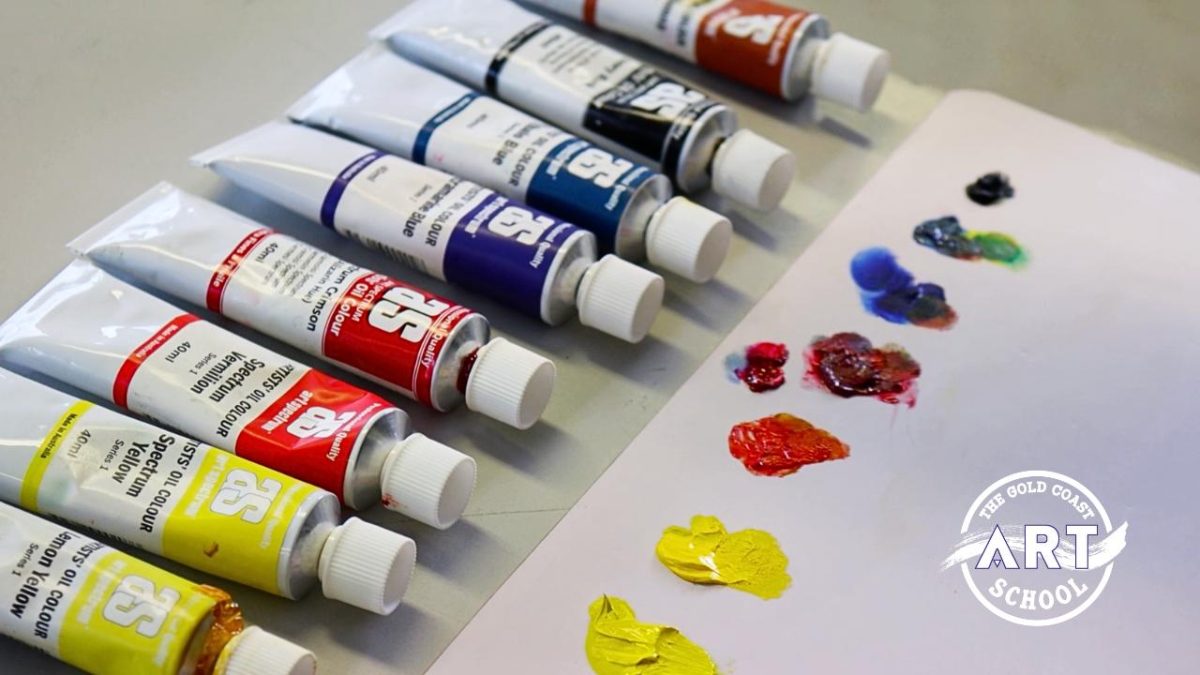
Learning to mix colours takes practice, but once you understand a few basic principles, it becomes much easier to create the colours you want. Here at The Gold Coast Art School, we teach colour mixing and practical painting techniques in our art classes and courses.
You’ll learn how different colours work together, how to mix the colours you need and how to avoid common beginner painting mistakes.
With hands-on guidance from our tutors and plenty of opportunities to practise, you’ll gradually build the skills and confidence to make your own colour mixing decisions.
Watch Our Free Colour Mixing Tutorials on YouTube
Start by watching with this handy tutorial about how to mix green accurately, without it turning muddy! Jess explains how complementary colours work using a colour wheel, and why it’s really important to know what happens, when colours are mixed together.